ARM vs 30-Year Fixed: How to Choose the Right Mortgage for Your Timeline
The 30-year fixed mortgage is often seen as the safest option, but it isn’t always the most efficient choice. For buyers who expect to move or refinance within a few years, an adjustable-rate mortgage (ARM) can offer lower initial rates and meaningful savings. Understanding how long you realistically plan to keep the loan is the key to choosing the right strategy.
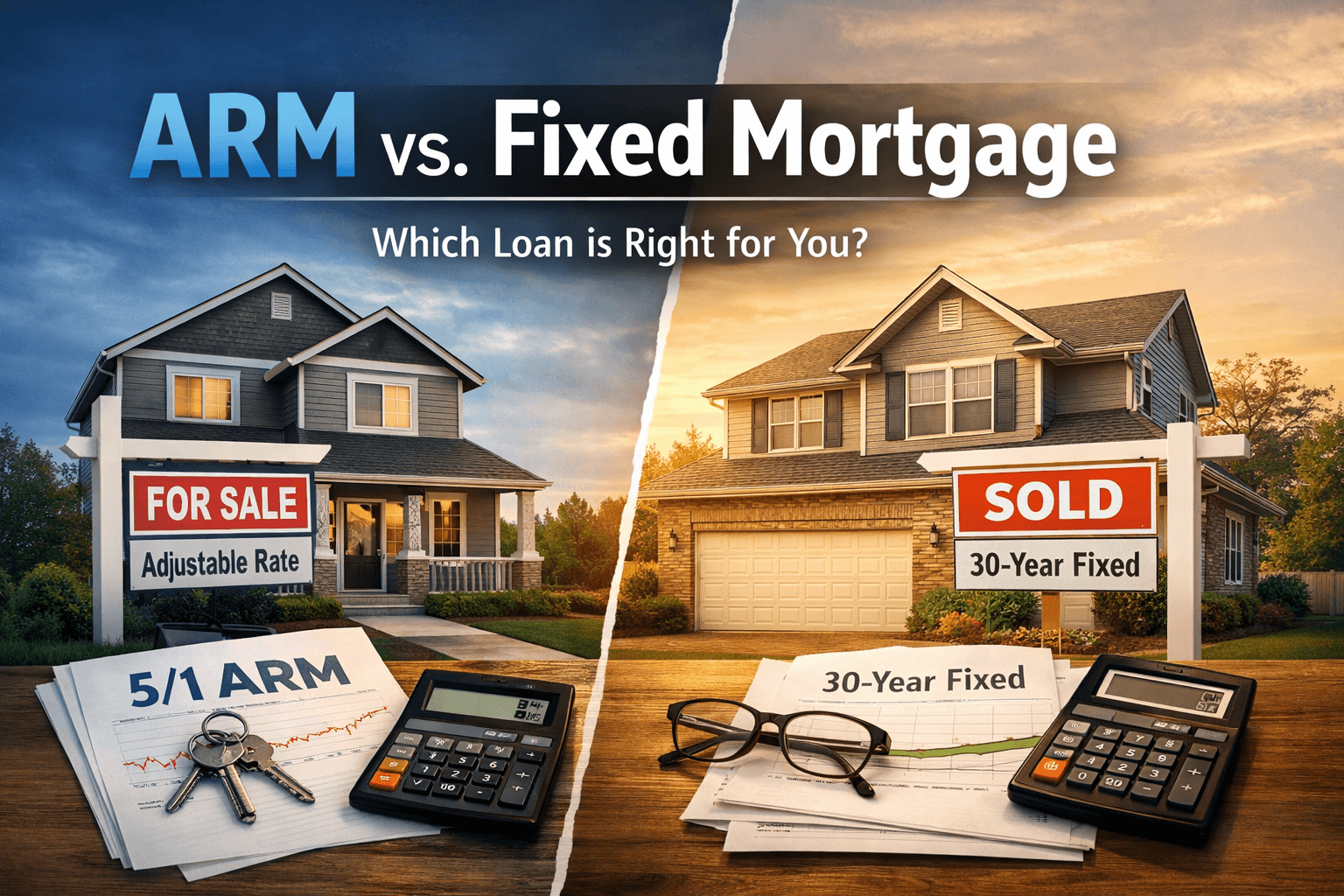
When an Adjustable-Rate Mortgage (ARM) Can Be the Smarter Choice
When most people think about getting a mortgage, the 30-year fixed-rate loan is usually the first option that comes to mind. It’s familiar, predictable, and for many homeowners it’s the right choice.
But not every buyer plans to keep the same loan for 30 years.
In some situations, an Adjustable-Rate Mortgage (ARM) can actually be the more practical and financially efficient option. The key factor isn’t just the interest rate — it’s how long you realistically expect to keep the loan.
For many buyers across Washington and Oregon, this is where the conversation becomes more interesting.
Paying for Rate Protection You May Never Use
One of the biggest benefits of a 30-year fixed mortgage is long-term rate protection. Your interest rate stays the same for decades regardless of what happens in the market.
That certainty has real value.
But like most forms of protection, it comes with a cost. Fixed-rate loans typically carry higher interest rates than comparable Adjustable-Rate Mortgages.
If a borrower knows they’ll likely sell the home, refinance, or move within five to seven years, paying extra for permanent rate protection may not make financial sense. In that case, they’re essentially paying for protection they’ll never use.
It’s a little like purchasing long-term insurance on a car you already know you’ll sell next year. The coverage is real — but the benefit disappears if you don’t keep the asset long enough to use it.
When an Adjustable-Rate Mortgage Can Make Sense
An Adjustable-Rate Mortgage (ARM) is designed for homeowners with a shorter planning horizon.
Most ARMs begin with a fixed introductory period — commonly 5, 7, or 10 years — where the interest rate remains stable. After that period ends, the rate can adjust based on market conditions.
During that initial fixed period, ARMs often offer lower interest rates than traditional 30-year fixed loans.
That can create meaningful advantages such as:
Lower monthly mortgage payments
Greater home buying power
Reduced interest costs during the years you expect to own the home
For many buyers, those early years are the only ones that matter if they plan to move before the adjustment period begins.
Buyers Who Often Benefit from ARMs
Certain life situations naturally align with the structure of an ARM. For example:
Military families who relocate every few years- Learn more about VA here- https://www.billcblack.com/loan-programs/va-loans
Corporate employees expecting job transfers
Growing families planning to move into a larger home later
First-time buyers who expect their housing needs to evolve
Homebuyers in transitional life stages who know their plans may change
These scenarios exist in every market, and ARMs were originally designed to help borrowers whose housing plans have a clear but shorter timeline.
The Right Mortgage Starts With a Real Plan
Choosing between a fixed-rate mortgage and an Adjustable-Rate Mortgage shouldn’t come down to chasing the lowest rate on the internet.
The better question is:
How long do you realistically expect to keep the loan?
If you plan to stay in the home for decades, the stability of a 30-year fixed mortgage may be the best fit.
If your timeline is shorter and relatively predictable, an ARM could lower costs during the years you actually hold the loan.
The right mortgage strategy is less about guessing where rates will go and more about aligning the loan structure with how you actually plan to live.
Mortgage Advice for Buyers in Washington and Oregon
Every borrower’s situation is different, which is why a thoughtful conversation matters more than simply comparing rates.
At Bill Black Team Black, we help buyers across Washington and Oregon look at the bigger picture — timeline, finances, life plans, and risk tolerance — before deciding which mortgage structure makes the most sense.
Because the best loan isn’t always the most common one.
It’s the one that fits your plan.